

Blog
Plastic vs Metal Bottle Printing: Which Bottle Printing Machine Delivers Better Results?

Walk into any supermarket, cosmetics store, or beverage outlet, and one thing becomes clear—packaging plays a major role in attracting customers. Before a buyer reads a product label or learns about its features, the appearance of the bottle often creates the first impression. This is one reason why many brands are moving beyond traditional labels and investing in direct bottle printing.
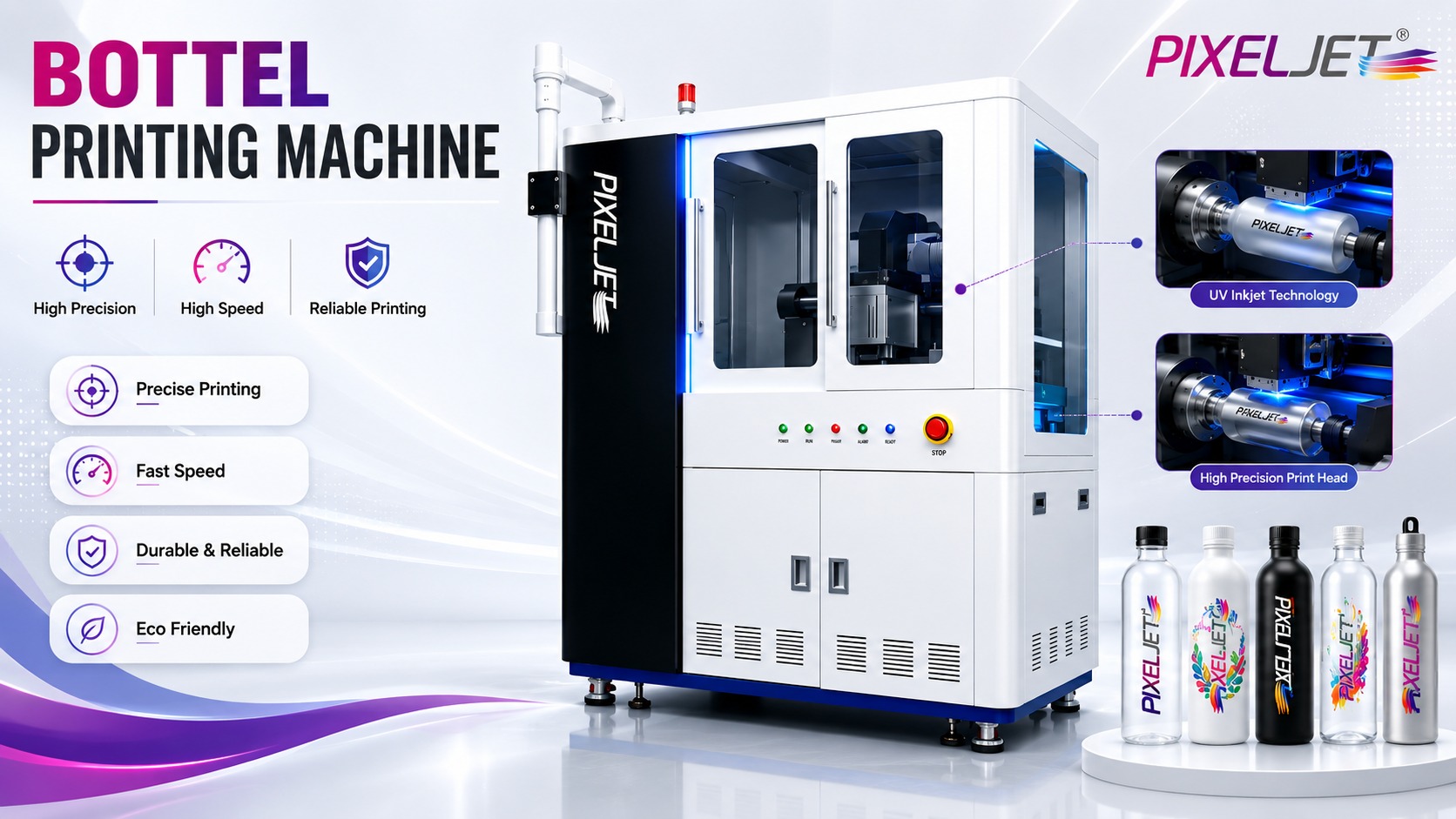
Whether the product is packaged in plastic, aluminum, or metal, selecting the right Bottle Printing Machine can influence print quality, durability, production efficiency, and overall brand presentation. However, many manufacturers still ask the same question: Which material delivers better printing results?
The answer depends on the product application, production requirements, and the printing technology being used.
Why Direct Bottle Printing is Becoming More Popular
Traditional labels can peel, fade, wrinkle, or become damaged during storage and transportation. Direct printing offers a more durable alternative by applying graphics, logos, and product information directly onto the bottle surface. Modern direct-to-object printing technology has made this process faster, more accurate, and more reliable than ever before.
Today, businesses use direct bottle printing to create:
- Vibrant branding elements
- Durable product information
- Premium packaging finishes
- Customized short-run orders
- Long-lasting print quality
As consumer demand for personalized and visually appealing products continues to grow, investing in a reliable Bottle Printing Machine has become an important consideration for many businesses.
Understanding Bottle Printing Technology
Modern UV printing systems allow manufacturers to print directly onto bottle surfaces without relying on sticky labels. The result is a cleaner appearance and a more professional finish that helps products stand out on retail shelves.
For businesses exploring industrial printing for the first time, understanding the basics of modern printing services can help simplify the decision-making process.
A professional Bottle Printing Machine is commonly used for:
- Beverage bottles
- Cosmetic packaging
- Personal care containers
- Pharmaceutical products
- Promotional merchandise
This flexibility has helped direct bottle printing become a preferred solution across multiple industries.
Aluminum and Metal Containers: Durable and Premium Packaging
Aluminum and metal containers are widely used for premium and industrial packaging applications. Their durable surfaces and attractive finishes make them suitable for cosmetics, personal care products, beverages, and specialty packaging where both appearance and longevity are important.
Advantages:
Aluminum and metal containers offer several benefits for direct-to-object UV printing, including:
- Excellent print quality
- Strong UV ink adhesion
- High durability
- Premium metallic appearance
- Suitable for industrial and consumer packaging
Challenges:
- May require surface preparation
- Material-specific print settings may be needed
- Higher material cost than some plastic options
For premium products, however, these limitations are often outweighed by the strong visual impact and perceived value that the packaging provides.
Printing on Plastic Bottles: Flexible and Production-Friendly
Plastic bottles remain one of the most widely used packaging options across multiple industries. Their lightweight design and cost efficiency make them ideal for large-scale manufacturing and distribution.
Advantages of Plastic Bottle Printing
- Lower packaging costs
- Lightweight transportation
- Easier handling during production
- Faster manufacturing workflows
- Suitable for high-volume applications
Modern UV printing systems have significantly improved print quality on plastic surfaces, allowing brands to achieve attractive and durable results without sacrificing production efficiency.
Challenges of Plastic Printing
Some plastic materials require additional surface preparation to ensure proper ink adhesion. Depending on the bottle type, print durability can vary if the correct printing process is not used.
Fortunately, ongoing advancements in UV printing technology continue to improve performance across a wide range of plastic packaging materials.
Plastic vs Aluminum and Metal: Which Produces Better Results?
Modern UV printing technology delivers excellent results on both plastic and metal surfaces when the correct printing settings and inks are used. Metal surfaces allow UV inks to produce crisp details, vibrant colors, and premium finishes that enhance brand presentation.
Plastic, however, often performs better when production speed, logistics, and overall cost efficiency are the primary goals.
| Feature | Aluminum/Metal Containers | Plastic Bottles |
| Print Quality | Excellent | Very Good |
| Premium Appearance | High | Moderate |
| Durability | High | Good |
| Production Efficiency | Good | High |
| Transportation Convenience | Moderate | High |
Ultimately, both materials can deliver excellent results when paired with the right Bottle Printing Machine
Choosing the Best Bottle Printing Machine
The quality of the final print depends not only on the bottle material but also on the technology behind the machine itself.
Businesses searching for the Best Bottle Printing Machine should evaluate:
- Print head technology
- UV curing consistency
- Material compatibility
- Production speed
- Ease of maintenance
- Automation features
For example, solutions offered by Pixeljet® are designed to support direct bottle printing applications across different materials while maintaining production consistency.
Companies looking to expand beyond bottle applications may also consider a UV Hybrid Printer for printing on both rigid and flexible media.
Understanding the Investment
Many buyers focus only on the initial purchase price. However, successful businesses evaluate long-term operating efficiency, maintenance requirements, and scalability. Similar to evaluating overall UV Printing Machine Cost, bottle printing investments should be viewed as part of a broader production strategy.
Factors such as ink consumption, operator training, maintenance schedules, and production capacity can all influence long-term profitability.
Choosing the Best Solution
There is no universal winner in the plastic versus metal printing debate. The best choice depends on your product goals, target market, and production requirements. More importantly, selecting the Best Bottle Printing Machine for your application can have a greater impact on results than the bottle material itself.
Businesses that invest in the right technology can achieve consistent print quality, improved branding, and long-term production efficiency across plastic, aluminum, and metal containers.
Which bottle material offers better print quality?
Aluminum and metal containers offer excellent durability and premium branding opportunities, while plastic bottles remain ideal for cost-effective, high-volume production.
Can one Bottle Printing Machine print on both aluminum and plastic bottles?
Yes, many modern bottle printing systems support plastic, aluminum, and metal applications, depending on the machine specifications.
Why do businesses choose direct bottle printing?
Direct printing provides better durability, improved branding, and a cleaner appearance compared to traditional labels.
What factors influence bottle printing investment decisions?
Production volume, material compatibility, maintenance requirements, and long-term operational efficiency are some of the most important considerations.